


Vertically Integrated Projects (VIP) provides UMD students of all backgrounds, disciplines, and levels of experience with the opportunity to engage in scaffolded, multidisciplinary team-based projects.
VIP Team Information

VIP Team
RetroComp
VIP Faculty Mentors:
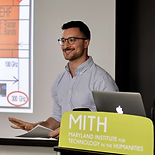
Dr. Jeffrey Moro

Maryland Institute for Technology in the Humanities, African American Digital and Experimental Humanities (AADHum), Artificial Intelligence Interdisciplinary Institute at Maryland (AIM)
Meeting Location, Day & Time:
0301 Hornbake Library, Maryland Institute for Technology in the Humanities (MITH), Wednesdays, 2:00pm - 4:30pm
Description:
RetroComp builds new futures for old computers.
Technology’s rapid development over the past seventy years has left behind generations of “obsolete” computers that nevertheless retain significant educational, historical, cultural, and aesthetic value. Apple IIs, iPods, Commodore 64s, and other vintage technologies are physical portals into “old” relationships with computers and computing that nevertheless feel quite “new” to modern eyes. Building on the Maryland Institute for Technology in the Humanities’ (MITH) long-standing collections of vintage computers and video game systems, RetroComp designs creative ways to breathe new life into yesterday’s technologies.
Our projects span the following keywords:
1. Preservation. While many vintage computers still work much as they did when they were released, time inevitably comes for their components. RetroComp repairs and maintains old computers and designs resources and experiences to document the experience of working with them.
2. Interaction. RetroComp believes that “old” ways of computing are not intrinsically obsolete. We create experiences that give students, researchers, and the public hands-on experience with vintage hardware and software, with a particular eye towards ways that vintage technologies can enable more creative and sustainable approaches to contemporary technological development.
3. Emulation. Even the most lovingly maintained computers are fragile and can only survive for so long. RetroComp leverages technologies of emulation — virtual software environments, community-based tools, and new hardware-based approaches like FGPA — to produce toolkits for educators looking to integrate hands-on work with vintage software environments into their research and teaching practice.
4. Imagination. RetroComp believes that old hardware and software environments are ripe for creative work. What would it look like to develop an Atari game, for native Atari hardware, in 2026?
Methods:
Digital humanities
Hacking, crafting, and circuit-bending
Creative media arts
Video game development
Archival research
Majors:
All students are welcome to apply; in particular, we seek students from:
Electrical Engineering
Computer Engineering
Immersive Media Design
Digital Storytelling & Poetics
Alongside anyone interested in the digital humanities and the history of computing from ARHU and beyond
Preferred Interests:
There are no formal pre-requisites. Experience with the collection, use, and maintenance of vintage computers, including video games systems, is welcome, as is facility with command-line tools and basic computer programming, particularly for Unix-style platforms. The most important thing is curiosity about how computers work on the level of their technology, history, and culture.
We are seeking students who are highly self-motivated; who are comfortable with open-ended, exploratory work; who can shift between individual and team-based projects; who enjoy getting their hands dirty, both literally and figuratively; and who are creative, outside-the-box thinkers.
While there is opportunity for students to work with RetroComp on short-term projects, we are especially seeking students who are interested in making a commitment of 2+ semesters or more, with an eye towards such students eventually leading streams of creative or research-based projects.