


Vertically Integrated Projects (VIP) provides UMD students of all backgrounds, disciplines, and levels of experience with the opportunity to engage in scaffolded, multidisciplinary team-based projects.
VIP Team Information

VIP Team
Gut Healing Smart Pill
VIP Faculty Mentors:


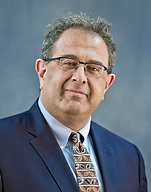

Dr. Younggeon Jin
Dr. Justin Stine
Dr. Rheza Ghodssi
Dr. Katharina Maisel
Department of Animal and Avian Sciences
A. James Clark School of Engineering
Department of Electrical and Computer Engineering
Fischell Department of Bioengineering
Meeting Location, Day & Time:
Weekly Team meeting: Tuesdays, 12:30 to 1:45 p.m. (in person); Reading Room, 0467 Animal Science Building
Additional Lab Time: Students are also expected to spend additional hours per week on hands-on subteam work in the lab, scheduled flexibly around their class schedules.
Biology Subteam: Jin Lab, 2414 Animal Science Building
Bioengineering Subteam: Maisel Lab, A3121 A. James Clark Hall
Engineering Subteam: Ghodssi & Stine Lab 2201 J.M. Patterson Building
Description:
Millions of people live with inflammatory bowel disease (IBD), such as Crohn’s disease and ulcerative colitis, where the lining of the gut is damaged and often fails to heal even with today’s best medicines. Our team is working toward a new kind of treatment: a swallowable “smart pill” that can sense where inflammation is inside the gut and release tiny nanoparticle medicines right at that spot to help the tissue repair itself.
This is a true team effort across three areas, and students join one of three subteams. On the Biology subteam (Jin Lab), students grow “mini-guts” (organoids) in the lab and work with animal models of gut inflammation, including mice and pigs, to test whether our treatment helps damaged tissue heal in the lab and in living animals. On the Bioengineering subteam (Maisel Lab), students design and build the nanoparticles that carry the medicine through the gut’s protective mucus layer and into the tissue. On the Engineering subteam (Ghodssi and Stine Labs), students help build and test the capsule’s sensing electronics that find inflamed areas and trigger delivery. All three subteams meet together each week, so everyone sees how the pieces connect and learns how a medical technology moves from an idea toward patient care.
You do not need research experience to join. New members start with hands-on training and work alongside experienced students, and over multiple semesters you can take on bigger projects and leadership roles. Our team is mentored by faculty from the College of Agriculture and Natural Resources and the A. James Clark School of Engineering and is part of a UMD Grand Challenges project.
Methods:
All subteams: Data analysis and visualization, lab safety and record keeping, scientific communication and teamwork
Biology (Jin Lab): Organoid (“mini-gut”) culture, animal models of gut inflammation (mice and pigs), animal care and handling, tissue collection and staining, microscopy and image analysis
Bioengineering (Maisel Lab): Nanoparticle design and preparation, testing how particles move through mucus and into tissue
Engineering (Ghodssi and Stine Labs): Bioimpedance sensing, capsule design, 3D printing, and prototype testing
Majors:
We welcome students from all majors. Majors that may be a strong fit include Animal Sciences, Biological Sciences, Biochemistry, Physiology and Neurobiology, Bioengineering, Chemical and Biomolecular Engineering, Materials Science and Engineering, Electrical and Computer Engineering, Mechanical Engineering, Computer Science, and Public Health Science.
Preferred Interests:
There are no prerequisites. We are looking for curious, reliable, and collaborative students who are excited about health technology and working on a team that spans biology and engineering. Experience with cell culture, electronics, coding, or data analysis is helpful but not required, since we provide training. We ask for a commitment of at least three semesters so that students can build skills, take ownership of a project, and mentor newer members. Students should be able to attend the weekly team meeting and set aside regular time each week for hands-on work in the lab. Students on the Biology subteam will work with laboratory animals and will complete required animal care and use training before starting hands-on animal work.